

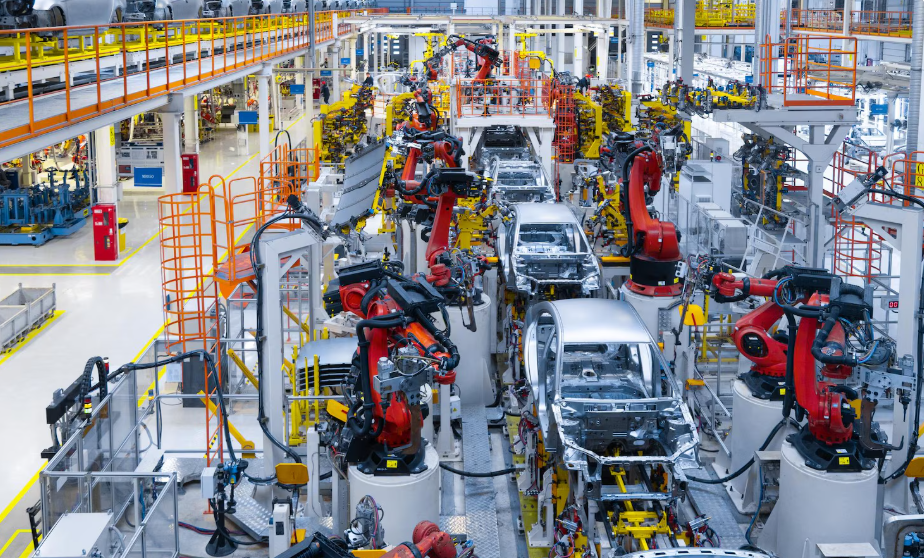
The global automotive industry is experiencing one of its most significant transformations in decades. Electric vehicles (EVs), once viewed as an emerging alternative to petrol and diesel cars, are becoming central to the strategies of automakers worldwide. While established manufacturers have invested heavily in electrification, Chinese EV makers are reshaping the competitive landscape through technological innovation, competitive pricing, and rapid product development. Their growing influence is forcing traditional automotive brands to reconsider how they design, manufacture, and sell vehicles.
This shift is not simply about replacing combustion engines with batteries. Chinese manufacturers are developing new approaches to vehicle software, battery technology, customer experience, and production efficiency. As competition intensifies across international markets, understanding these developments offers valuable insight into the future direction of the automotive industry.
The Rise of China’s Electric Vehicle Industry
China’s emergence as a major force in electric mobility reflects years of investment in manufacturing infrastructure, battery production, charging networks, and domestic demand. Government policies supporting electrification helped establish an environment in which manufacturers could experiment, expand production, and compete for customers. Over time, Chinese companies developed extensive supply chains that support the production of batteries, electric motors, and other essential vehicle components.
Domestic competition has also accelerated innovation. Manufacturers must continually improve their products to attract buyers in a crowded market, encouraging faster development cycles and greater attention to pricing. Companies such as BYD, NIO, and XPeng have established distinct positions within China’s EV sector, offering vehicles that range from affordable electric models to premium cars with advanced digital features. Their progress demonstrates that China’s automotive ambitions extend well beyond producing inexpensive vehicles for local consumers.
The industry’s international expansion is changing competitive expectations. Chinese manufacturers are exploring opportunities across Europe, Southeast Asia, Latin America, and other regions, although their access varies according to local regulations, tariffs, and consumer preferences. For established automakers, this expansion introduces competitors that may combine manufacturing scale with strong battery expertise and increasingly sophisticated vehicle technology.
Technology Is Becoming a Major Competitive Advantage
Electric vehicles compete on more than driving range and acceleration. Battery efficiency, charging performance, software integration, driver assistance, and connected services all influence purchasing decisions. Chinese manufacturers have invested in these areas, treating the vehicle as a technology platform rather than simply a mechanical product with an electric powertrain.
Battery development is particularly important. Battery costs influence vehicle affordability, while improvements in energy density and thermal management can affect range, safety, and charging performance. China’s extensive battery supply chain gives many domestic manufacturers access to important technical capabilities and production capacity. However, individual companies differ significantly in their battery strategies, and continued research remains necessary to improve durability, reduce costs, and address material constraints.
Software is another area of competition. Modern EVs increasingly rely on digital interfaces, over-the-air updates, connected applications, and integrated driver-assistance systems. Chinese brands have developed vehicles designed around these features, appealing to consumers who value a connected driving experience. Traditional automakers are responding by strengthening software development and partnerships, recognising that the quality of a vehicle’s digital experience can be as important as its physical design.
How Established Automakers Are Responding
Legacy manufacturers bring substantial advantages to the competition, including established brands, extensive dealership networks, manufacturing expertise, and experience supporting vehicles throughout their lifecycles. Companies such as Volkswagen, Toyota, Ford, and General Motors have invested in electrification while adapting their product strategies to changing consumer expectations. Their challenge is to translate these existing strengths into competitive electric vehicles without allowing organisational complexity or legacy production systems to slow progress.
Pricing is one of the most immediate pressure points. Chinese manufacturers have benefited from developed domestic supply chains and intense competition, creating pressure on established brands to improve manufacturing efficiency and control costs. Traditional automakers must balance affordability with profitability, especially when transitioning factories, retraining employees, and developing new vehicle platforms. The result is a more demanding environment in which production scale and disciplined capital allocation matter considerably.
What Chinese EV Competition Means for Investors
The expansion of Chinese EV makers has created new opportunities for investors to examine the relationship between technological innovation, manufacturing scale, and financial performance. However, rapid industry growth does not automatically translate into attractive returns for every company. Investors must consider profitability, operating expenses, capital requirements, competitive positioning, and the sustainability of demand.
For those researching the premium electric vehicle segment, NIO stock offers a way to explore how investors evaluate a company operating in a highly competitive market. NIO has differentiated itself through premium electric vehicles, digital services, and battery-swapping infrastructure. These features create a distinct business model, but they also involve investment and operating costs that investors need to assess alongside sales performance and progress toward sustainable profitability.
Conclusion
Chinese EV manufacturers are challenging established automotive brands by combining battery expertise, competitive production, digital innovation, and ambitious international strategies. Their rise is changing industry expectations and encouraging traditional automakers to accelerate development, rethink costs, and strengthen their technology capabilities.
For consumers, this competition may expand vehicle choices and encourage improvements in affordability and features. For investors, it creates opportunities that require careful evaluation of business fundamentals, competitive pressures, and long-term financial sustainability.