
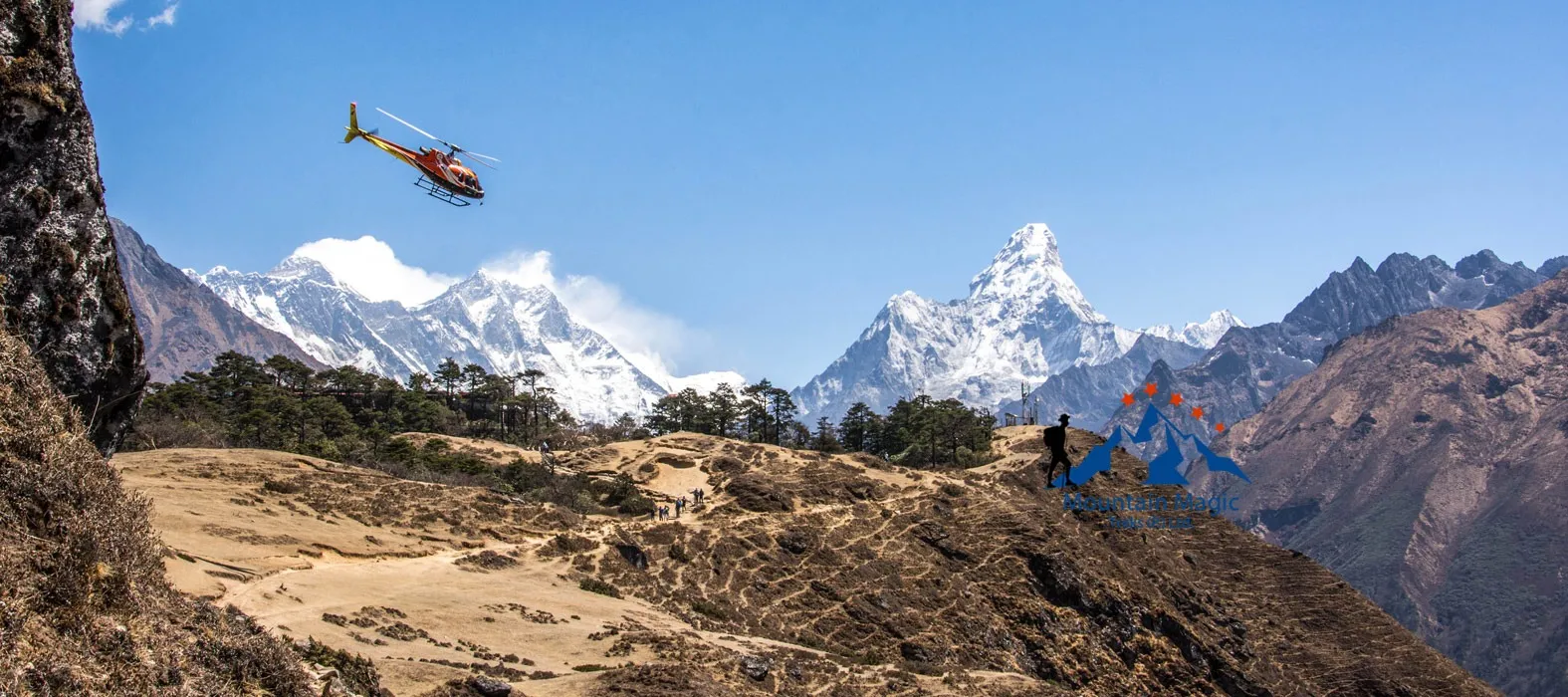
Reaching the Everest region’s famous destinations is a major part of the journey, but the experience does not end when the helicopter leaves the mountains. After several days of walking through the Khumbu Valley, travelers return to Kathmandu and move from remote mountain settlements back into a busy city environment.
The Everest Base Camp Trek with Helicopter Return is designed to connect the high-altitude walking route with a helicopter journey from the Gorakshep area toward Kathmandu. This final stage involves more than simply reaching the airport. Travelers may need to manage their luggage, complete hotel arrangements, check their onward flights, and give themselves time to recover.
Knowing what happens after the mountain section helps travelers finish the journey with fewer logistical surprises.
The Helicopter Journey from Gorakshep to Kathmandu
The return flight is one of the main features of this trekking package. After completing the planned visits to Everest Base Camp and Kala Patthar, travelers return to the Gorakshep area for the scheduled helicopter arrangement.
The flight offers a different view of the Khumbu landscape. From the air, travelers may see mountain valleys, glaciers, settlements, and the changing terrain between the high Himalayas and lower elevations.
Why Flight Conditions Matter
Helicopter operations in the Everest region depend on several factors:
-
Weather and visibility.
-
Wind conditions.
-
Aircraft performance at high elevation.
-
Passenger and baggage weight.
-
Landing area and operational safety.
A flight planned for a particular time may be delayed or changed if conditions are unsuitable. The pilot and operator make the final decision about whether it is safe to fly.
Travelers should avoid making tight international flight connections based on an assumed helicopter arrival time.
Arriving Back in Kathmandu
Kathmandu is the main arrival and departure hub for this itinerary. After the helicopter journey, travelers return to a city with more developed transport, accommodation, restaurants, shops, and communication services.
The change can feel significant after spending several days in remote mountain settlements.
Airport and Hotel Arrangements
The package includes airport transfers and two nights in a five-star Kathmandu hotel under the stated standard package details. Travelers should confirm the precise transfer schedule and hotel arrangements in their booking confirmation.
After arrival, the usual next steps may include:
-
Collecting personal luggage.
-
Confirming the transfer arrangement.
-
Traveling to the hotel.
-
Checking into the assigned room.
-
Informing the operator about any missing or delayed baggage.
-
Reviewing the remaining schedule.
Keeping essential documents and personal valuables in hand luggage makes this process easier.
Returning to a Lower Altitude
The helicopter journey brings travelers down from the high elevations of the Khumbu region to Kathmandu, which is approximately 1,400 meters above sea level.
This is a major change in altitude. Breathing and physical activity may feel easier at the lower elevation, but travelers should not assume that every altitude-related problem disappears immediately.
Continue Paying Attention to Your Health
Some symptoms may continue after descent. Travelers who experienced headaches, nausea, dizziness, unusual weakness, or breathing problems during the trek should inform their guide and seek medical advice when needed.
Severe symptoms require urgent medical attention. A return flight does not replace medical assessment or treatment.
The Everest Base Camp Trek with Helicopter Return includes a shorter return route, but it does not remove the need for altitude awareness during the walking days.
What to Do With Trekking Equipment After the Journey
After returning to Kathmandu, travelers can sort their equipment and separate items that need cleaning, drying, or inspection.
Mountain conditions can leave clothing and equipment covered in dust, moisture, and dirt. Checking everything before packing for the international journey helps prevent problems later.
Equipment Worth Checking
-
Trekking boots and socks.
-
Jackets and insulated clothing.
-
Gloves and headwear.
-
Trekking poles.
-
Water bottles and personal containers.
-
Cameras, phones, and power banks.
-
Personal medication and first-aid supplies.
Allow damp clothing to dry properly before placing it inside a closed suitcase. Electronic equipment should also be checked for moisture or condensation before charging.
Using the Remaining Hotel Time in Kathmandu
The Kathmandu hotel stay provides a useful opportunity to rest after the high-altitude journey. Travelers may also have time to organize photographs, contact family, arrange shopping, or enjoy a meal in the city.
The pace in Kathmandu is very different from the upper trekking route. Restaurants, shops, transport services, and other facilities are generally easier to access.
Keep the Final Schedule Flexible
Travelers should avoid filling every available hour with activities. Flight delays, baggage issues, or physical tiredness may affect the schedule.
If the trip includes a farewell dinner, travelers should confirm its timing with the operator. The standard package details include a farewell dinner, but the exact arrangement should be checked in the booking confirmation.
Preparing for the International Departure
The final hotel stay is also the time to prepare for the journey home or the next destination.
International travelers should check their airline’s baggage allowance, airport reporting time, passport validity, and any transit requirements that apply to their route.
A Simple Departure Check
Before leaving the hotel, confirm:
-
Passport and travel documents are accessible.
-
Airline booking details are correct.
-
Checked and cabin baggage meet airline rules.
-
Personal medication is packed safely.
-
Important electronic devices are charged.
-
Airport transfer arrangements are confirmed.
-
Any outstanding hotel or personal expenses are settled.
It is also sensible to keep copies of important travel documents separately from the originals.
Understanding What the Package Covers at the End
The final part of the journey is easier to manage when travelers understand which services are included and which expenses remain their responsibility.
The standard package details include two nights in a five-star Kathmandu hotel, airport transfers, the planned helicopter services, mountain accommodation, guide and porter support, permits, meals during the trek, and other listed support items.
However, some personal expenses are excluded.
These may include:
-
Nepal tourist visa fees.
-
Personal drinks and additional snacks.
-
Laundry and personal shopping.
-
Tips for guides, porters, and service staff.
-
Extra hotel nights or meals caused by schedule disruptions.
-
Additional baggage charges.
-
Travel insurance.
Travelers should use the latest written package confirmation as the final reference because service details can change.
Why the Final Return Stage Deserves Proper Planning
The return to Kathmandu is part of the overall itinerary, not an afterthought. Helicopter delays, luggage arrangements, hotel check-in, and international departure schedules all need to fit together.
A sensible plan includes enough flexibility for weather-related changes. It also avoids treating the helicopter schedule as a guaranteed arrival time.
The Everest Base Camp Trek with Helicopter Return combines mountain trekking, high-altitude destinations, and air transportation into one journey. Understanding the final stage helps travelers complete the experience with realistic expectations and better travel arrangements.
Final Thoughts
The return to Kathmandu marks the transition from the remote Khumbu region back to city life. After visiting Everest Base Camp and Kala Patthar, the helicopter journey provides a different way to leave the mountains, while the included hotel stay gives travelers time to rest and organize their onward travel.
The Everest Base Camp Trek with Helicopter Return is not complete simply because the walking route has ended. The final flight, airport transfer, hotel arrangements, and international departure all matter. Planning these details carefully helps bring the 10-day journey to a well-organized close.
Frequently Asked Questions
1. Where does the helicopter return journey start?
The planned return helicopter service operates from the Gorakshep area toward Kathmandu. Exact departure arrangements depend on the operator and current flight conditions.
2. How many hotel nights are included in Kathmandu?
The stated standard package includes two nights in a five-star Kathmandu hotel. Travelers should check their booking confirmation for the exact dates and hotel details.
3. Can helicopter delays affect international flights?
Yes. Weather and other operational conditions can delay helicopter services. Travelers should allow a suitable time gap before their international departure.
4. Should travelers rest after returning from the mountains?
Allowing time to recover is sensible, particularly after several days of high-altitude walking. Anyone with ongoing or serious symptoms should seek medical advice.
5. Are personal expenses included after returning to Kathmandu?
Not all personal expenses are included. Shopping, laundry, personal drinks, tips, and certain extra costs may remain the traveler’s responsibility.