

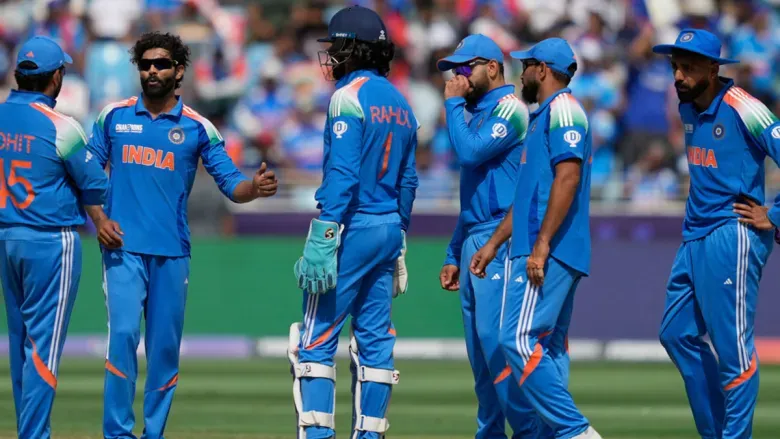
Spin vs Pace Debate is as old as the sport itself, representing the two distinct philosophies of how to dismantle a batting lineup and claim ultimate glory on the pitch. If you have ever stood at the crease with the sun beating down on your neck, you know the visceral difference between the two. One is a battle of raw, unadulterated velocity that tests your reflexes and courage, while the other is a cerebral chess match that challenges your patience and technique. This fundamental divide is what gives cricket its unique flavor, ensuring that no two sessions of play are ever truly identical.
I remember vividly a scorching afternoon at the Adelaide Oval, watching a young fast bowler steam in from the Cathedral End. The sound of the ball thudding into the wicketkeeper’s gloves was like a gunshot echoing through the stands. Just an hour later, the captain turned to a leg-spinner, and the atmosphere shifted instantly. The silence became expectant, the fielders moved closer to the bat, and every delivery felt like a whispered invitation to disaster. That transition perfectly encapsulates why we can never truly settle this argument; both styles are essential, yet they operate in entirely different dimensions of the human experience.
From a technical perspective, the debate isn’t just about speed versus turn. It is about how a bowler interacts with the elements—the wind, the humidity, the cracks in the soil, and the physical state of the leather ball. Fast bowlers are the hunters of the morning, utilizing the “shine” and the “swing” to deceive the eye. Spinners are the scavengers of the afternoon and evening, using the “rough” and the “wear” to create doubt in the mind. To understand the game, one must appreciate the intricate dance between these two crafts.
The Tactical Nuances of the Spin vs Pace Debate in Modern Cricket
When we analyze the Spin vs Pace Debate through the lens of modern tactical evolution, we see that the shorter formats of the game have redefined the value of each style. In T20 cricket, for instance, the role of the wrist-spinner has become paramount. Teams no longer view them as luxury items but as primary wicket-taking weapons. The ability of a spinner to go for runs but still claim the crucial middle-order wickets is often the difference between winning and losing. This has forced a re-evaluation of the traditional “containment” role that spinners once held in the longer format.
Pace bowlers have also had to reinvent themselves to survive the onslaught of modern power-hitting. It is no longer enough to simply bowl fast; one must possess a “toolkit” of variations. The knuckleball, the back-of-the-hand slower ball, and the wide yorker are now standard requirements for any elite fast bowler. This has turned pace bowling into a much more technical discipline than it was thirty years ago. The modern pacer is a scientist of angles and speeds, constantly adjusting their output to disrupt the batter’s rhythm and take advantage of the smallest technical flaw.
The pitch remains the ultimate judge in this ongoing rivalry. In the subcontinent, where the soil is often dry and crumbly, spin is the undisputed king. The ball grips the surface, providing a level of “purchase” that makes life miserable for even the most accomplished batters. Conversely, on the green, bouncy tracks of Australia or South Africa, pace is the weapon of choice. The extra bounce and lateral movement off the seam create an environment where a moment’s hesitation can lead to a quick trip back to the dressing room. This regional disparity is what keeps the international game vibrant and unpredictable.
Experience has shown that the best captains are those who know how to balance these two forces. A team that relies too heavily on one often finds itself exposed when the conditions don’t suit their primary strength. The most successful eras in cricket history, such as the West Indies dominance in the 80s or the Australian golden era of the 90s, featured a perfect harmony. While the Windies relied on an unrelenting pace battery, the Australians had the luxury of pairing their elite seamers with the greatest leg-spinner the world has ever seen. It is this synergy that creates a truly formidable bowling unit.
Regional Influence and the Spin vs Pace Debate
The geography of cricket plays a massive role in shaping how young players develop their skills and which side of the Spin vs Pace Debate they eventually support. In the streets of Mumbai or Colombo, young children grow up watching the ball turn sharply off dusty patches of ground. They learn to use their wrists to impart revolutions, understanding intuitively that guile can overcome brawn. This cultural upbringing produces a lineage of “mystery” bowlers who continue to baffle international lineups with their subtle variations in flight and dip.
In contrast, the windswept outfields of New Zealand or the lush grounds of England favor the “swing” bowler. Here, the atmosphere itself becomes an ally. Young bowlers are taught to hold the seam upright, allowing the aerodynamic properties of the ball to work their magic in the air. This produces a different kind of expertise—one based on consistency and the ability to move the ball both ways. It is a more traditional form of pace bowling that relies on the “uncertainty of the corridor” to find the edge of the bat.
Then there is the Australian approach, which often prioritizes “hit the deck” pace and bounce. The hard, flat tracks of the MCG or the Gabba require a bowler to exert maximum effort into the surface to extract any life from it. This has bred a culture of tall, powerful fast bowlers who use height and shoulder strength to intimidate batters. This style is less about the “magic” of the air and more about the “brutality” of the bounce. It is a relentless, physical test that remains one of the most exciting spectacles in world sport.
When these different schools of thought clash in a global tournament, the Spin vs Pace Debate reaches its fever pitch. We see how a batter raised on the spinning tracks of the East struggles with the chin-high bouncers of the South. Similarly, we see how the “pace-loving” batters of the West are often all at sea when faced with a ball that turns three degrees on a crumbling day-five pitch. This clash of cultures is the heart of Test cricket, proving that there is no universal “right way” to bowl; there is only the “right way” for the specific moment and place.
The Physics of Flight and the Speed of Sound
To truly appreciate the mastery involved in both crafts, we must look at the science of what happens when the ball leaves the hand. For a fast bowler, the challenge is to manipulate the boundary layer of air around the ball. By keeping one side shiny and the other rough, they create a pressure differential that causes the ball to “swing.” When they achieve “reverse swing,” it feels like magic, but it is actually a triumph of physics and ball maintenance. It requires a collective team effort to keep the ball in the perfect state for the specialist to work their craft.
Spinners, on the other hand, rely on the Magnus effect. By imparting high revolutions on the ball, they create a pressure difference that causes the ball to “drift” in the air before it even hits the pitch. This drift is often more dangerous than the turn itself, as it forces the batter to move their feet and change their head position at the last millisecond. The “dip” that a great spinner achieves makes the ball land shorter than the batter expects, leading to mistimed shots and catches in the deep. It is an art form that requires an incredible level of finger and wrist strength.
The psychological impact of these two styles is also vastly different. Pace is an immediate threat. It triggers the “fight or flight” response in the human brain. When a ball is traveling at 150 kilometers per hour, the batter has less than half a second to react. This creates a high-pressure environment where fear can lead to technical errors. Fast bowlers often use this to their advantage, “setting up” a batter with a series of short balls before delivering a full, swinging delivery that catches them off-guard.
Spin is a slow-building pressure. It is the feeling of being trapped in a net. A great spinner will bowl several identical-looking deliveries that all behave slightly differently. They play with the batter’s mind, making them wonder which way the next one will turn. This creates a “paralysis by analysis,” where the batter becomes so focused on what the ball might do that they forget to play the ball that is actually there. It is a war of attrition that rewards the bowler with the greatest mental stamina and the ability to remain patient under pressure.
The Role of the Pink Ball and Day-Night Transitions
The introduction of day-night Test matches has added a fascinating new dimension to the Spin vs Pace Debate. The pink ball, which is used in these matches, behaves differently than the traditional red ball. It tends to have a thicker layer of lacquer to maintain visibility under floodlights, which often leads to more “swing” during the twilight period. Fast bowlers look forward to this “magic hour” with relish, knowing that the ball will dance through the air with renewed energy as the sun sets and the temperature drops.
Spinners, however, have found the pink ball a bit more challenging. The extra lacquer can make the ball “skid” off the surface rather than “grip” and “turn.” This changes the tactical approach of the captain. Instead of looking for traditional turn, they might ask their spinner to bowl a flatter, quicker trajectory to exploit the ball’s tendency to slide through. This adaptability is what separates the great modern spinners from those who are stuck in the past. They understand that they must adjust their “revs” and their “pace” to suit the specific characteristics of the equipment.
We also see how the “extra layer” on the pink ball affects the seamers’ ability to extract reverse swing. Because the ball stays shiny for longer, the traditional methods of roughening one side become less effective. This forces pace bowlers to rely more on traditional “conventional” swing and “seam” movement. It is a return to the basics of the craft, proving that even in the age of high-tech innovation, the foundational skills of the game remain the ultimate deciders of success.
The transition from natural light to artificial light is a unique psychological test for the batters. The “sighting” of the ball becomes more difficult, and the shadows on the pitch can play tricks with the eyes. Fast bowlers use this period to increase their intensity, knowing that the batter is at their most vulnerable. Spinners use it to experiment with their “flight,” knowing that the batter might misjudge the length of the ball in the artificial glow. It is a period of pure theatre that has breathed new life into the longest format of the game.
Data Analytics and the Search for an Edge
In the current era, the Spin vs Pace Debate is no longer just a matter of opinion; it is a matter of data. Teams now have access to “pitch maps,” “beehive diagrams,” and “release point analytics” for every bowler in the world. They know exactly how much a spinner turns the ball on a specific day of a match and at what height a fast bowler’s bouncer typically reaches the batter. This information has made the game more transparent, but it has also made it more difficult for bowlers to hide their weaknesses.
Analysts use “Expected Wickets” (xW) and “Control Percentage” to measure the effectiveness of a bowling spell. This has led to some surprising discoveries. For example, a spinner who doesn’t take many wickets but maintains a high “control percentage” might be more valuable than a fast bowler who takes wickets but is erratic. This data-driven approach has allowed teams to build more balanced attacks, selecting bowlers who complement each other’s strengths and weaknesses. It has moved the debate from the bar-room into the boardroom.
However, many veterans argue that data can only take you so far. Cricket is a game played by humans, not algorithms. You cannot measure the “fear” that a fast bowler creates or the “doubt” that a spinner instills. You cannot quantify the “gut feeling” a captain has when they decide to bring on a part-time bowler to break a stubborn partnership. The best teams are those that use data as a guide but allow their players the freedom to follow their instincts. The data provides the map, but the players provide the journey.
I have seen matches where the data suggested a team should bowl exclusively spin, only for a fast bowler to come on and take a hat-trick through sheer willpower and aggression. I have seen the opposite happen as well. This unpredictability is why we love the sport. If the Spin vs Pace Debate could be solved by a computer program, the game would lose its soul. The beauty lies in the human error, the unexpected brilliance, and the fact that on any given day, the underdog can overcome the favorite through a single moment of genius.
The Impact of All-Rounders on the Bowling Balance
The presence of a world-class all-rounder can completely shift the dynamics of the Spin vs Pace Debate within a team. An all-rounder who can bowl ten steady overs of pace or spin provides the captain with a “get out of jail free” card. It allows the team to play an extra specialist in the other discipline, creating a much more balanced and versatile attack. Think of players like Jacques Kallis or Shane Watson, whose ability to provide “heavy” overs of pace allowed their teams to dominate in all conditions.
In the modern era, we are seeing more “spinning” all-rounders who can bat in the top six. This has been a massive advantage for teams in the subcontinent, as it allows them to play three specialist spinners without weakening their batting lineup. This “deep” bowling attack makes it almost impossible for the opposition to find a “safe” period in the innings. Every over is a challenge, and every bowler is a threat. This is the ultimate goal for any team—to have an attack that is so balanced and so varied that the opposition has no place to hide.
The emergence of the “bowling all-rounder”—the player who is primarily a bowler but can contribute crucial runs at number eight or nine—is also changing the game. These players provide the tail with “wag,” turning a mediocre total into a competitive one. This added value makes them much more attractive to selectors, often giving them the edge over a pure specialist. This has led to a rise in the overall standard of play, as bowlers are now expected to be competent with the bat, and batters are often asked to provide a few “part-time” overs to help the main bowlers.
This trend toward multi-skilling has made the debate more complex. We no longer just ask “Spin or Pace?”; we ask “Which combination of skills provides the best balance for this specific pitch?” It is a more holistic approach to team building that recognizes the interconnectedness of all facets of the game. A great fast bowler is made even better when they have a steady spinner at the other end to build pressure. A great spinner is made even better when they have a lethal pacer to finish off the tail. It is a collective effort that requires every player to contribute in multiple ways.
The Psychological Battle: Who Breaks First?
Ultimately, the Spin vs Pace Debate comes down to the psychological battle between the bowler and the batter. It is a test of who will blink first. For a fast bowler, the goal is to break the batter’s “shell.” They want to force them into a hurried shot or a defensive error through sheer speed and intimidation. It is a high-energy, high-impact approach that demands immediate results. When a fast bowler is “on song,” they can run through a batting order in a matter of minutes, leaving the opposition in a state of shock.
For a spinner, the goal is to “sedue” the batter into a mistake. They want to lure them out of their crease or tempt them into an ambitious drive. It is a subtle, deceptive approach that requires a long-term vision. A spinner is happy to give away a few runs if it means they are “setting the bait” for a wicket later in the over. It is a much more patient game that rewards the bowler who can keep their composure even when the batter is playing well.
I have seen batters who look completely comfortable against 150km/h pace, playing with a straight bat and perfect timing. Yet, those same batters can look like beginners when faced with a ball that turns six inches and bounces unexpectedly. This disparity in comfort levels is what makes the debate so fascinating. Everyone has a weakness, and the captain’s job is to find the right bowler to exploit it. It is a search for the “kink in the armor,” a quest that defines every great bowling performance.
The “stare” of a fast bowler and the “muttering” of a spinner as they walk back to their mark are both parts of the psychological warfare. One is an overt display of aggression, intended to remind the batter of the physical danger they are in. The other is a private dialogue, a constant recalibration of flight and turn. Both are equally effective in their own way. As long as there are humans playing this game, the mental side will remain the most important factor in the Spin vs Pace Debate, proving that the greatest battles in cricket are fought in the six inches between the ears.