

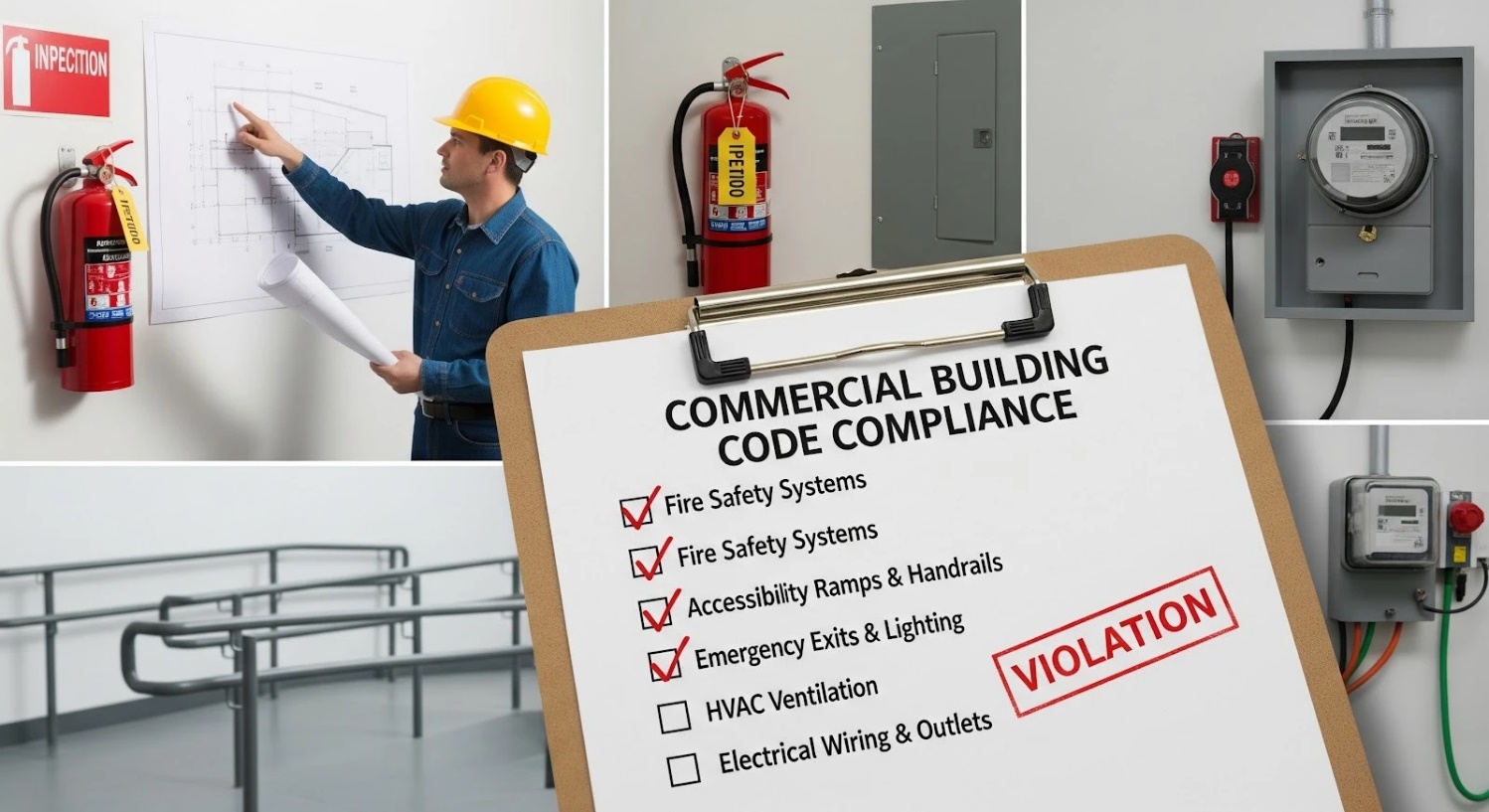
There is almost a sense of a “moving target” when it comes to code compliance, particularly in high-traffic commercial areas where tenants change, layouts are modified, and what is intended as a temporary measure can become a permanent one. The positive news is that the majority of compliance issues fall into a few foreseeable categories, and in most cases, they can be resolved without transforming your building into a construction site.
This guide takes you through the most common code compliance problems in commercial buildings, why they are highlighted by inspectors, and how to rectify them in an effective yet cost-conscious manner.
1. Means of Egress: Managing Exits and Emergency Escape Routes
One area that inspectors are concerned about at any given time is egress: the way people exit the premises in case of an emergency.
Common violations include blocked exit doors, storage in corridors, doors swinging against the direction of egress, lack of panic hardware, and exit paths that are not clearly marked.
How to fix it:
- Test the entire exit route both when the business is in operation (when it is messy) and out of business (when doors might be locked differently).
- Remove objects from corridors and stairwells—not even temporarily.
- Check that exit doors operate properly: they must open without special knowledge or effort.
- Install exit signs where needed, along with emergency lights. Test both to ensure that when the time to leave comes, they actually work.
2. Fire Protection Compliance: Alarms, Sprinklers, and Extinguishers
Problems related to fire protection often arise when systems are not maintained, when layouts change due to tenant improvements, or when equipment is moved without a re-check of coverage.
Red flags comprise out-of-date extinguisher labels, hindered access to fire extinguishers, sprinkler heads blocked by shelves, absent alarm pull stations, and unlatched fire-rated doors.
How to fix it:
- Schedule regular checks of extinguishers and make sure the appropriate type is installed regarding the risks (kitchen, electrical, general).
- Keep a clear distance around sprinklers and panels (storage creep is a huge offender).
- Ensure fire-rated doors close and latch automatically—door closers which “purport” to work frequently fail inspection.
- Verify coverage: When you have reworked walls or ceilings, enquire whether sprinkler coverage and alarm equipment are still in compliance with space requirements.
3. Electrical Code Violations: Panels, Labeling, and Wiring Safety
Electrical problems vary from minimal labeling issues to severe risks. Common citations usually include uncovered junction boxes, overloaded circuits, the use of extension cords as permanent wiring, and blocked electrical panels.
How to fix it:
- Keep electrical panels clear—treat the area in front of them as a “no storage” zone.
- Label breakers to ensure staff can react promptly during an emergency (so maintenance does not have to guess).
- Install hard-wired outlets in strategic spots to replace extension-cord solutions.
- Treat warning signs as urgent: warm outlets, flickering lights, frequent breaker trips, or burning smells are frequently followed by failures.
4. Accessibility and ADA Compliance: Restrooms and Entrance Routes
The problem of accessibility is not only a question of compliance but directly influences the ability of people to use your space securely and comfortably. These items are often neglected during minor renovations.
Popular issues include sharp or uneven access points, entry doors that lack assist devices where needed, a lack of clearance in restroom designs, missing grab bars, and counters or hardware mounted at an inconvenient height.
How to fix it:
- Review the “path of travel”: Parking/sidewalk (where available) – entrance – reception/service point – restrooms.
- Measure the clearances, do not eye them; minor variations in the location of fittings can generate major functional variations.
- Prioritize major upgrades: Door hardware, threshold transitions, signage, and restroom accessories can be easily fixed without extensive demolition.
- Plan ahead: In case you are going to remodel, ensure that the scope includes any extra accessibility improvements required on the route serving the refurbished space.
5. HVAC and Ventilation Standards: Air Quality and Occupant Safety
Ventilation and mechanical code concerns are more likely to manifest in rooms that have high occupancy (gyms, classes), sources of odor (restaurants), or limited fresh air supply.
The general results are usually a lack of ventilation, unauthorized equipment substitutes, blocked intake/exhaust routes, or ineffective maintenance that creates mold hazards and comfort grievances.
How to fix it:
- Maintain service logs on filters, coil cleaning, and checkups—documentation is important if issues arise.
- Ensure that exhaust systems vent properly and that make-up air needs are fulfilled (mostly in commercial kitchens).
- Re-examine design: In case you have switched the purpose of a space (such as storage to an office), check whether the mechanical design remains in line with the new occupancy requirements.
6. Plumbing and Sanitation Codes: Backflow, Leaks, and Fixtures
Leaks are not the only plumbing compliance issue. Cross-connection control, drainage, hot water (safety), the number of fixtures, and restroom conditions are areas frequently checked by inspectors.
How to fix it:
- Confirm backflow devices are present and documented according to the requirements of your local rules.
- Deal with slow drains, frequent blockages, and water damage right away—these can end up being sanitation and building safety concerns, not just a simple nuisance.
- Count your fixtures: When the number of fixtures depends on occupancy, do not assume an old plan will work if a new tenant increases the occupancy load.
7. Unpermitted Work and Missing Building Records
This one is a shocker: even if the work itself is compliant, you can fail if there are no permits, approvals, inspections, or as-built documentation. An area may appear fantastic and still score low on a compliance check if the paper trail is missing.
How to fix it:
- Prepare a building file (hard copy or digital) containing permits, inspection reports, system test reports, and service contracts.
- Demand records immediately: When you are handed over a space, ensure you get the records then—not when a compliance deadline is approaching.
- Ask for help: In case of uncertainty, reach out to your local authority having jurisdiction and ask them how to correct unauthorized alterations; it can often be fixed easily provided you take action before an incident occurs.
Strategies for Managing Commercial Property Compliance
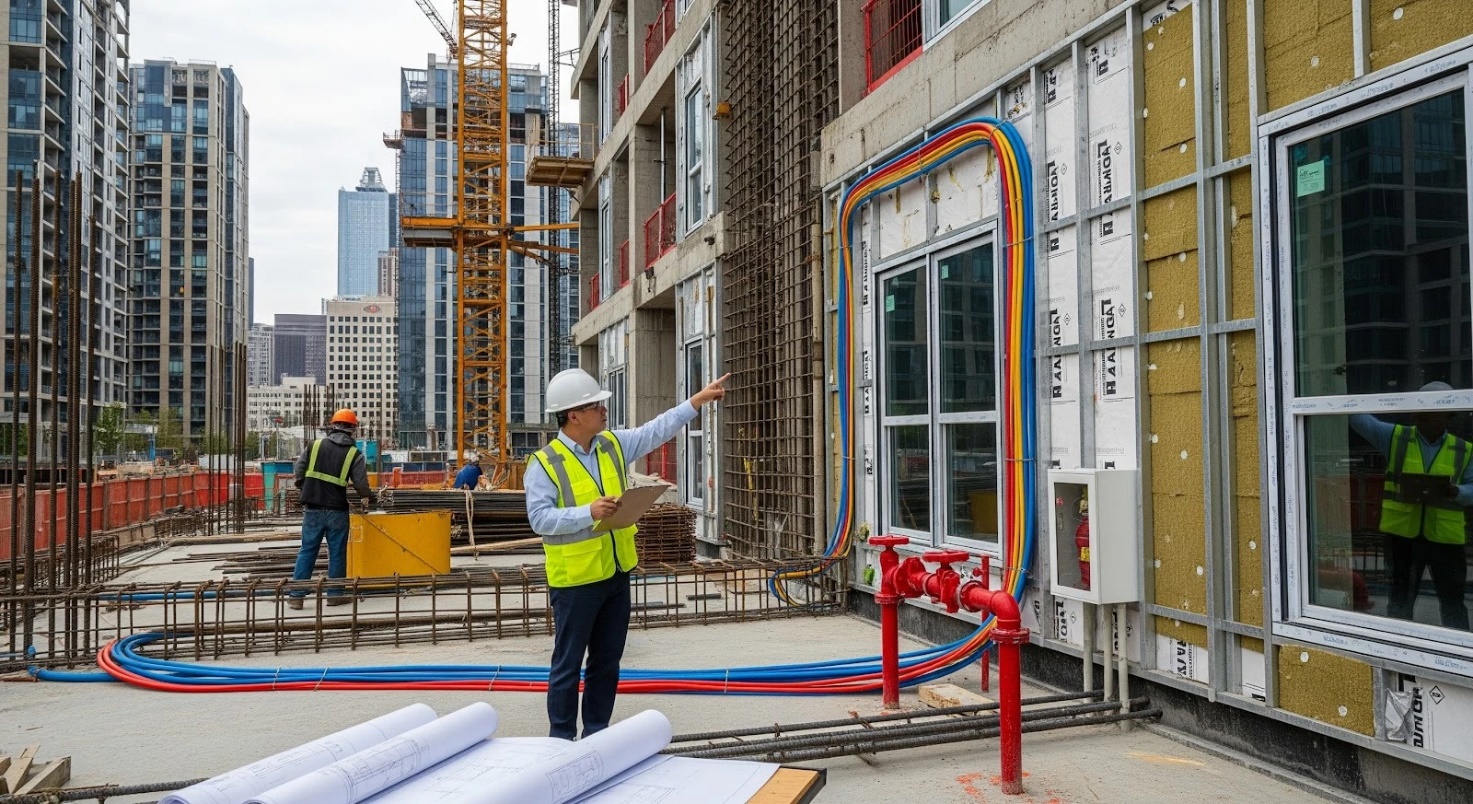
A two-lane strategy is the most common approach for commercial property: quick wins to reduce risk, and long-term upgrades requiring coordination, permits, or capital budgeting.
Quick Wins: Monthly Maintenance and Inspection Checklist
Most compliance issues, in reality, are consistency issues: the checklist drifts out of compliance since no one “owns” the compliance process. It is at this stage that a stringent schedule of property maintenance and repair can help avoid minor problems (blocked exits, expired tags, door hardware failures) becoming recurring inspection violations.
Select a cadence (weekly for egress paths, monthly for extinguishers and emergency lights, quarterly for documentation checks) and assign it to a position, not an individual, so that the process does not die if a staff member leaves.
Capital Improvements: Handling Major Renovations and Construction
When compliance necessitates the relocation of walls, changes in egress paths, changes in occupancy designation, or alteration of core building systems, it ceases to be a maintenance item and becomes a controlled construction scope. When that happens, hiring Commercial Construction Services can assist you in organizing drawings, permits, qualified trades, inspections, and scheduling so that your fixes never create new violations (and do not disturb tenants more than essential).
One practical tip: Insist any contractor or consultant describe which areas of the scope are “like-for-like” replacements versus code-triggering changes, as this difference will impact cost and time.
Conclusion: Staying Inspection-Ready Every Day
The inspections you constantly prepare for are the easiest to pass. Maintaining compliance is not a scramble when exits remain clear, fire systems are documented, and minor problems are addressed early.